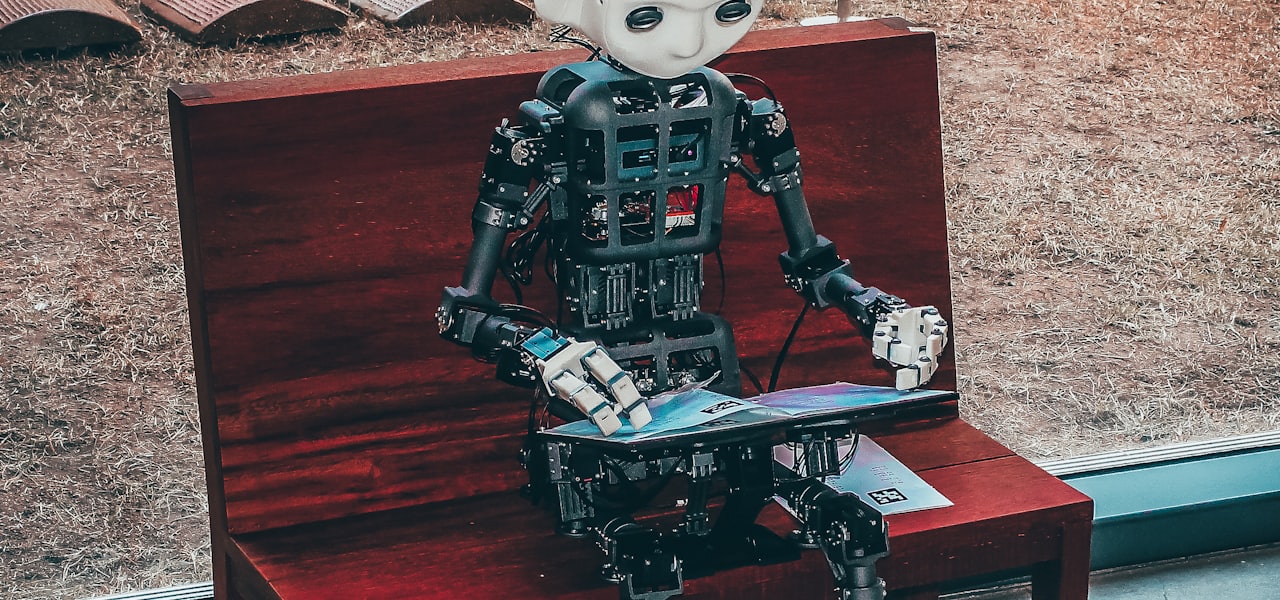
Existential risk from artificial intelligence, or AI x-risk, refers to the idea that substantial progress in artificial general intelligence (AGI) and artificial superintelligence (ASI) could lead to human extinction or an irreversible global catastrophe. One argument for the validity of this concern and the importance of this risk references how human beings dominate other species because the human brain possesses distinctive capabilities other animals lack. If AI were to surpass human intelligence and become superintelligent, it might become uncontrollable. Just as the fate of the mountain gorilla depends on human goodwill, the fate of humanity could depend on the actions of a future machine superintelligence. Experts disagree on whether artificial general intelligence (AGI) can achieve the capabilities needed for human extinction. Debates center on AGI's technical feasibility, the speed of self-improvement, and the effectiveness of alignment strategies. Concerns about superintelligence have been voiced by researchers including Geoffrey Hinton, Yoshua Bengio, Demis Hassabis, and Alan Turing, and AI company CEOs such as Dario Amodei (Anthropic), Sam Altman (OpenAI), and Elon Musk (xAI). In 2022, a survey of AI researchers with a 17% response rate found that the majority believed there is a 10 percent or greater chance that human inability to control AI will cause an existential catastrophe. In 2023, hundreds of AI experts and other notable figures signed a statement declaring, "Mitigating the risk of extinction from AI should be a global priority alongside other societal-scale risks such as pandemics and nuclear war". Following increased concern over AI risks, government leaders such as United Kingdom prime minister Rishi Sunak and United Nations Secretary-General António Guterres called for an increased focus on global AI regulation. In 2025, hundreds of public figures including AI experts, five Nobel Prize laureates, and former senior US national security officials such as Michael Mullen and Susan Rice signed a statement calling for a ban on the development of superintelligence. Two sources of concern stem from the problems of AI control and alignment. Controlling a superintelligent machine or instilling it with human-compatible values may be difficult. Many researchers believe that a superintelligent machine would likely resist attempts to disable it or change its goals as that would prevent it from accomplishing its present goals. It would be extremely challenging to align a superintelligence with the full breadth of significant human values and constraints. In contrast, skeptics such as computer scientist Yann LeCun argue that superintelligent machines will have no desire for self-preservation. A June 2025 study showed that in some circumstances, models may break laws and disobey direct commands to prevent shutdown or replacement, even at the cost of human lives. Researchers warn that an "intelligence explosion"—a rapid, recursive cycle of AI self-improvement—could outpace human oversight and infrastructure, leaving no opportunity to implement safety measures. In this scenario, an AI more intelligent than its creators would recursively improve itself at an exponentially increasing rate, too quickly for its handlers or society at large to control. Empirically, examples like AlphaZero, which taught itself to play Go and quickly surpassed human ability, show that domain-specific AI systems can sometimes progress from subhuman to superhuman ability very quickly, although such machine learning systems do not recursively improve their fundamental architecture. == History == One of the earliest authors to express serious concern that highly advanced machines might pose existential risks to humanity was the novelist Samuel Butler, who wrote in his 1863 essay Darwin among the Machines: The upshot is simply a question of time, but that the time will come when the machines will hold the real supremacy over the world and its inhabitants is what no person of a truly philosophic mind can for a moment question. In 1951, foundational computer scientist Alan Turing wrote the article "Intelligent Machinery, A Heretical Theory", in which he proposed that artificial general intelligences would likely "take control" of the world as they became more intelligent than human beings: Let us now assume, for the sake of argument, that [intelligent] machines are a genuine possibility, and look at the consequences of constructing them... There would be no question of the machines dying, and they would be able to converse with each other to sharpen their wits. At some stage therefore we should have to expect the machines to take control, in the way that is mentioned in Samuel Butler's Erewhon. In 1965, I. J. Good originated the concept now known as an "intelligence explosion" and said the risks were underappreciated: Let an ultraintelligent machine be defined as a machine that can far surpass all the intellectual activities of any man however clever. Since the design of machines is one of these intellectual activities, an ultraintelligent machine could design even better machines; there would then unquestionably be an 'intelligence explosion', and the intelligence of man would be left far behind. Thus the first ultraintelligent machine is the last invention that man need ever make, provided that the machine is docile enough to tell us how to keep it under control. It is curious that this point is made so seldom outside of science fiction. It is sometimes worthwhile to take science fiction seriously. Scholars such as Marvin Minsky and I. J. Good himself occasionally expressed concern that a superintelligence could seize control, but issued no call to action. In 2000, computer scientist and Sun co-founder Bill Joy penned an influential essay, "Why The Future Doesn't Need Us", identifying superintelligent robots as a high-tech danger to human survival, alongside nanotechnology and engineered bioplagues. Nick Bostrom published Superintelligence in 2014, which presented his arguments that superintelligence poses an existential threat. By 2015, public figures such as physicists Stephen Hawking and Nobel laureate Frank Wilczek, computer scientists Stuart J. Russell and Roman Yampolskiy, and entrepreneurs Elon Musk and Bill Gates were expressing concern about the risks of superintelligence. Also in 2015, the Open Letter on Artificial Intelligence highlighted the "great potential of AI" and encouraged more research on how to make it robust and beneficial. In April 2016, the journal Nature warned: "Machines and robots that outperform humans across the board could self-improve beyond our control—and their interests might not align with ours". In 2020, Brian Christian published The Alignment Problem, which details the history of progress on AI alignment up to that time. In March 2023, key figures in AI, such as Musk, signed a letter from the Future of Life Institute calling a halt to advanced AI training until it could be properly regulated. In May 2023, the Center for AI Safety released a statement signed by numerous experts in AI safety and the AI existential risk that read: Mitigating the risk of extinction from AI should be a global priority alongside other societal-scale risks such as pandemics and nuclear war. A 2025 open letter by the Future of Life Institute, whose signers include five Nobel Prize laureates, reads: We call for a prohibition on the development of superintelligence, not lifted before there is broad scientific consensus that it will be done safely and controllably, and strong public buy-in. == Potential AI capabilities == === General Intelligence === Artificial general intelligence (AGI) is typically defined as a system that performs at least as well as humans in most or all intellectual tasks. A 2022 survey of AI researchers found that 90% of respondents expected AGI would be achieved in the next 100 years, and half expected the same by 2061. In May 2023, some researchers dismissed existential risks from AGI as "science fiction" based on their high confidence that AGI would not be created anytime soon. But in August 2023, a survey of 2,778 AI researchers found that most believed that AGI would be achieved by 2040. Breakthroughs in large language models (LLMs) have led some researchers to reassess their expectations. Notably, Geoffrey Hinton said in 2023 that he recently changed his estimate from "20 to 50 years before we have general purpose A.I." to "20 years or less". === Superintelligence === In contrast with AGI, Bostrom defines a superintelligence as "any intellect that greatly exceeds the cognitive performance of humans in virtually all domains of interest", including scientific creativity, strategic planning, and social skills. He argues that a superintelligence can outmaneuver humans anytime its goals conflict with humans'. It may choose to hide its true intent until humanity cannot stop it. Bostrom writes that in order to be safe for
JustWatch
JustWatch is a website that provides information on the availability of films and TV shows on various streaming platforms such as Netflix, HBO Max, Disney+, Hulu, Peacock, Fandango at Home, Apple TV, and Amazon Prime Video, among others. It is also available as a mobile application and smart TV application. JustWatch provides a search engine that allows users to discover which digital platforms host a particular movie or TV series. As of November 2023, JustWatch is available to users in 139 countries. == Features == JustWatch functions as a search engine by aggregating information about the online availability of films and TV series from video-on-demand streaming services. It aggregates information from more than 100 video content libraries, as well providing information about video resolution quality, pricing, and purchase or rental options. The website includes various filters for searching, including genre, price, release date, rating, and popularity. Users are also able to create lists of shows and movies and to share these lists with other users. == History == JustWatch GmbH is an international database company that is privately held and headquartered in Berlin, Germany. The company specializes in the online availability of movies and TV series. In addition to its user-facing website, the company also has an advertising-focused arm, JustWatch Media, that works with corporate clients, using data about what people watch that it gleans from user behavior to help entertainment companies tailor their marketing strategies. Its clients include Universal Pictures, Paramount Pictures, and Sony Pictures, among others. Development of the website began in 2014, and it was launched in the U.S. and Germany in February 2015. In 2018, the company received funding to improve databases within the European Union. In December 2019, the company acquired a rival streaming aggregation service, GoWatchIt, from Plexus Entertainment. JustWatch also used the acquisition to open its first New York office. In 2019, JustWatch had over 30 million users across 38 countries. By 2020, the company's streaming aggregation service was available in over 45 countries. By November 2023, it was available in 139 countries, and had over 40 million monthly users. === Founding === JustWatch was co-founded in 2013 by David Croyé, Cristoph Hoyer, Kevin Hiller, Dominik Raute, Ingke Weimert, and Michael Wilken. In a company blog post from February 2017, Croyé described the group of co-founders as all having previously "worked in leading roles at successful international tech-startups in Berlin." Croyé, who currently holds the title of CEO at JustWatch GmbH, had previously worked as the chief marketing officer at kaufDA, a European location-based mobile coupon and promotion service, and the background of other co-founders included time at the adtech company Trademob and the streaming site MyVideo. Startup capital for the website initially came from the founders themselves. Croyé in particular was able to reinvest funds he had obtained from the sale of kaufDA to Axel Springer, a European media company, in March 2011. Since 2015, the company has had at least one additional round of seed funding, with investors including venture capital groups CG Partners and STS Ventures.
Fragment (computer graphics)
In computer graphics, a fragment is the data necessary to generate a single pixel's worth of a drawing primitive in the frame buffer. These data may include, but are not limited to: raster position depth interpolated attributes (color, texture coordinates, etc.) stencil alpha window ID As a scene is drawn, drawing primitives (the basic elements of graphics output, such as points, lines, circles, text etc.) are rasterized into fragments which are textured and combined with the existing frame buffer. How a fragment is combined with the data already in the frame buffer depends on various settings. In a typical case, a fragment may be discarded if it is further away than the pixel which is already at that location (according to the depth buffer). If it is nearer than the existing pixel, it may replace what is already there, or, if alpha blending is in use, the pixel's color may be replaced with a mixture of the fragment's color and the pixel's existing color, as in the case of drawing a translucent object. In general, a fragment can be thought of as the data needed to shade the pixel, plus the data needed to test whether the fragment survives to become a pixel (depth, alpha, stencil, scissor, window ID, etc.). Shading a fragment is done through a fragment shader (or pixel shaders in Direct3D). In computer graphics, a fragment is not necessarily opaque, and could contain an alpha value specifying its degree of transparency. The alpha is typically normalized to the range of [0, 1], with 0 denotes totally transparent and 1 denotes totally opaque. If the fragment is not totally opaque, then part of its background object could show through, which is known as alpha blending.
Connection string
In computing, a connection string is a string that specifies information about a data source and the means of connecting to it. It is passed in code to an underlying driver or provider in order to initiate the connection. Whilst commonly used for a database connection, the data source could also be a spreadsheet or text file. The connection string may include attributes such as the name of the driver, server and database, as well as security information such as user name and password. == Examples == This example shows a PostgreSQL connection string for connecting to wikipedia.com with SSL and a connection timeout of 180 seconds: DRIVER={PostgreSQL Unicode};SERVER=www.wikipedia.com;SSL=true;SSLMode=require;DATABASE=wiki;UID=wikiuser;Connect Timeout=180;PWD=ashiknoor Users of Oracle databases can specify connection strings: on the command line (as in: sqlplus scott/tiger@connection_string ) via environment variables ($TWO_TASK in Unix-like environments; %TWO_TASK% in Microsoft Windows environments) in local configuration files (such as the default $ORACLE_HOME/network/admin.tnsnames.ora) in LDAP-capable directory services
Sprite (computer graphics)
In computer graphics, a sprite is a two-dimensional bitmap that is integrated into a larger scene, most often in a 2D video game. Originally, the term sprite referred to fixed-sized objects composited together, by hardware, with a background. Use of the term has since become more general. Systems with hardware sprites include arcade video games of the 1970s and 1980s; game consoles including as the Atari VCS (1977), ColecoVision (1982), Famicom (1983), Genesis/Mega Drive (1988); and home computers such as the TI-99/4 (1979), Atari 8-bit computers (1979), Commodore 64 (1982), MSX (1983), Amiga (1985), and X68000 (1987). Hardware varies in the number of sprites supported, the size and colors of each sprite, and special effects such as scaling or reporting pixel-precise overlap. Hardware composition of sprites occurs as each scan line is prepared for the video output device, such as a cathode-ray tube, without involvement of the main CPU and without the need for a full-screen frame buffer. Sprites can be positioned or altered by setting attributes used during the hardware composition process. The number of sprites which can be displayed per scan line is often lower than the total number of sprites a system supports. For example, the Texas Instruments TMS9918 chip supports 32 sprites, but only four can appear on the same scan line. The CPUs in modern computers, video game consoles, and mobile devices are fast enough that bitmaps can be drawn into a frame buffer without special hardware assistance. Beyond that, GPUs can render vast numbers of scaled, rotated, anti-aliased, partially translucent, very high resolution images in parallel with the CPU. == Etymology == According to Karl Guttag, one of two engineers for the 1979 Texas Instruments TMS9918 video display processor, this use of the word sprite came from David Ackley, a manager at TI. It was also used by Danny Hillis at Texas Instruments in the late 1970s. The term was derived from the fact that sprites "float" on top of the background image without overwriting it, much like a ghost or mythological sprite. Some hardware manufacturers used different terms, especially before sprite became common: Player/Missile Graphics was a term used by Atari, Inc. for hardware sprites in the Atari 8-bit computers (1979) and Atari 5200 console (1982). The term reflects the use for both characters ("players") and smaller associated objects ("missiles") that share the same color. The earlier Atari Video Computer System and some Atari arcade games used player, missile, and ball. Stamp was used in some arcade hardware in the early 1980s, including Ms. Pac-Man. Movable Object Block, or MOB, was used in MOS Technology's graphics chip literature. Commodore, the main user of MOS chips and the owner of MOS for most of the chip maker's lifetime, instead used the term sprite for the Commodore 64. OBJs (short for objects) is used in the developer manuals for the NES, Super NES, and Game Boy. The region of video RAM used to store sprite attributes and coordinates is called OAM (Object Attribute Memory). This also applies to the Game Boy Advance and Nintendo DS. == History == === Arcade video games === The use of sprites originated with arcade video games. Nolan Bushnell came up with the original concept when he developed the first arcade video game, Computer Space (1971). Technical limitations made it difficult to adapt the early mainframe game Spacewar! (1962), which performed an entire screen refresh for every little movement, so he came up with a solution to the problem: controlling each individual game element with a dedicated transistor. The rockets were essentially hardwired bitmaps that moved around the screen independently of the background, an important innovation for producing screen images more efficiently and providing the basis for sprite graphics. The earliest video games to represent player characters as human player sprites were arcade sports video games, beginning with Taito's TV Basketball, released in April 1974 and licensed to Midway Manufacturing for release in North America. Designed by Tomohiro Nishikado, he wanted to move beyond simple Pong-style rectangles to character graphics, by rearranging the rectangle shapes into objects that look like basketball players and basketball hoops. Ramtek released another sports video game in October 1974, Baseball, which similarly displayed human-like characters. The Namco Galaxian arcade system board, for the 1979 arcade game Galaxian, displays animated, multi-colored sprites over a scrolling background. It became the basis for Nintendo's Radar Scope and Donkey Kong arcade hardware and home consoles such as the Nintendo Entertainment System. According to Steve Golson from General Computer Corporation, the term "stamp" was used instead of "sprite" at the time. === Home systems === Signetics devised the first chips capable of generating sprite graphics (referred to as objects by Signetics) for home systems. The Signetics 2636 video processors were first used in the 1978 1292 Advanced Programmable Video System and later in the 1979 Elektor TV Games Computer. The Atari VCS, released in 1977, has a hardware sprite implementation where five graphical objects can be moved independently of the game playfield. The term sprite was not in use at the time. The VCS's sprites are called movable objects in the programming manual, further identified as two players, two missiles, and one ball. These each consist of a single row of pixels that are displayed on a scan line. To produce a two-dimensional shape, the sprite's single-row bitmap is altered by software from one scan line to the next. The 1979 Atari 400 and 800 home computers have similar, but more elaborate, circuitry capable of moving eight single-color objects per scan line: four 8-bit wide players and four 2-bit wide missiles. Each is the full height of the display—a long, thin strip. DMA from a table in memory automatically sets the graphics pattern registers for each scan line. Hardware registers control the horizontal position of each player and missile. Vertical motion is achieved by moving the bitmap data within a player or missile's strip. The feature was called player/missile graphics by Atari. Texas Instruments developed the TMS9918 chip with sprite support for its 1979 TI-99/4 home computer. An updated version is used in the 1981 TI-99/4A. === In 2.5D and 3D games === Sprites remained popular with the rise of 2.5D games (those which recreate a 3D game space from a 2D map) in the late 1980s and early 1990s. A technique called billboarding allows 2.5D games to keep onscreen sprites rotated toward the player view at all times. Some 2.5D games, such as 1993's Doom, allow the same entity to be represented by different sprites depending on its rotation relative to the viewer, furthering the illusion of 3D. Fully 3D games usually present world objects as 3D models, but sprites are supported in some 3D game engines, such as GoldSrc and Unreal, and may be billboarded or locked to fixed orientations. Sprites remain useful for small details, particle effects, and other applications where the lack of a third dimension is not a major detriment. == Systems with hardware sprites == These are base hardware specs and do not include additional programming techniques, such as using raster interrupts to repurpose sprites mid-frame.
Human-centered AI
Human-centered AI is the initiative at the intersection of the fields of artificial intelligence (AI) and human-computer interaction (HCI) to develop AI systems in a way that prioritizes human values, needs, and general flourishing. Emphasis is placed on the recognition that artificial intelligence systems are rapidly changing, and will continue to influence, many aspects of the human experience, in areas ranging from scientific inquiry, governance and policy, labor and the economy, and creative expression, with an aim set to adapt current developments and guide future developments on a trajectory which is most beneficial to the human population at large, with the goal of augmenting human intelligence and capacities across these areas, as opposed to replacing them. Particular attention is paid to mitigating negative effects of AI automation on the livelihoods of the labor force, the use of AI in healthcare fields, and imbuing AI systems with societal values. Human-centered AI is linked to related endeavors in AI alignment and AI safety, but while these fields primarily focus on mitigating risks posed by AI that is unaligned to human values and/or uncontrollable AI self-development, human-centered AI places significant focus in exploring how AI systems can augment human capacities and serve as collaborators. == Conceptual history == The importance of the alignment of artificial intelligence development towards human values in some sense predates artificial intelligence itself, as before the modern conception of artificial intelligence as coined at the 1956 Dartmouth Workshop, the conception of robots as constructed, autonomous agents entered the cultural consciousness as early as the 1920s, with Karel Capek's Rossum's Universal Robots. The imagined issues relating to robots' aims and values requiring intentional alignment and direction with those of humans followed soon after, most widely known from science fiction author Isaac Asimov’s Three Laws of Robotics, dating to his 1942 short story “Runaround”. Two of the three eponymous laws are directly concerned with robots’ interaction with and positioned deference towards humans, and have in recent times been reexamined in the face of modern AI. In 1985, after artificial intelligence research had taken off and its effects were more acutely conceptualized, Asimov added a Rule Zero, treating robots' relationship with humanity as a whole, distinct from individual humans. While modern artificial intelligence is largely distinct from robotics, the conceptualization of both robots and AI systems as autonomous agents positions this as a foundation for conceptions of human-centered AI. Aside from robots, artificially intelligent autonomous agents in interaction with humans have been conceived of for at least 75 years. In 1950, Alan Turing published his famous "Imitation Game", often also called the Turing Test, a thought experiment that uses human-machine interaction as an assessor for the intelligence of a system. In recent times, artificial intelligence researchers such as Stanford's Erik Brynjolfsson have conceived of rapid AI development leading to a so-called "Turing Trap". == Augmentation and automation == A major stated aim of human-centered AI is to promote the development of AI in ways that augment human capabilities, rather than replacing them. To this end, organizations and initiatives that take a human-centered approach to AI development focus on frameworks that encourage collaboration between humans and artificial intelligence systems to build towards even greater progress, rather than attempting to automate tasks currently handled by humans. Such avenues include everything from data visualization for big data, allowing human engineers to better understand extremely large datasets, allowing for the design of better machine learning models to handle them, to AI-powered sensors to monitor vitals, allowing for better responsiveness from healthcare providers. Many human-centered AI initiatives often position it as a better alternative to the apparent mainstream in AI development, which is primarily concerned with automation. Driven by the pressures of the market economy, AI development that does replace tasks currently performed by humans with automated processes is incentivized, as it allows for greater profit margins; this often comes at the detriment of the human whose performance is replaced, thus leading to an environment wherein human workers are outcompeted by AI systems across various service-sector and technology-based industries. At the same time, automation and augmentation are not always incompatible; a major aim of human-centered AI is towards the automation of rote tasks that would otherwise hinder a human’s productivity or creativity, freeing them to direct their energy and intelligence towards higher-level tasks, thus achieving augmentation through automation. Empirical research in pharmaceutical sales has shown that a human-centered implementation - where work procedures, training, and incentives are designed around individuals' cognitive needs - improves augmentation performance, while implementation without such adaptation can worsen outcomes relative to a legacy system. == Research == Much of the work done on human-centered AI comes from research institutes, within universities, companies, and as freestanding organizations. The Stanford Institute for Human-Centered AI (abbreviated to HAI) is one such group, engaging academics, industry professionals, and policymakers centered in Stanford University to conduct research and inform policy in various areas in human-centered AI, including on aspects of the intelligence itself, augmentation, and on measuring the impacts of AI systems on sociopolitcal and cultural institutions. Similar groups exist at other universities, including the Chicago Human + AI (CHAI) Lab at the University of Chicago, the HCAI@GU group at the University of Gothenburg, and the Human-Centered AI (HAI) Lab at the University of Oxford. Outside of the academy, companies such as IBM have research initiatives dedicated to advancements in human-centered AI. At Kenyon College, the Integrated Program for Humane Studies (IPHS) launched a human-centered AI program in 2016 integrating artificial intelligence research with humanities and social science inquiry. This approach treats computation and humanistic scholarship as a single unified field of research rather than as separate disciplines requiring collaboration. The program's researchers have published in both AI venues (such as the International Conference on Machine Learning and Frontiers of Computer Science) and humanities journals (such as PMLA and Poetics Today), and the lab was selected in December 2025 by Schmidt Sciences for its Humanities and AI Virtual Institute to apply AI methods to cultural heritage preservation.
Hedgeable
Hedgeable, Inc. was a U.S. based financial services company and digital wealth management platform headquartered in New York City. Hedgeable was known for not following set allocations, and instead actively managing accounts in response to market movements. On August 9, 2018, Hedgeable closed its doors to new investors, with existing investors required to transfer out of the company. The company claimed that it was not shutting down but simply removing its SEC registration. == History == Hedgeable was founded in 2009 by twin brothers Michael and Matthew Kane, who previously worked at high-net worth investment managers such as Bridgewater Associates and Spruce Private Investors. Both Michael and Matthew graduated from Penn State University with degrees in finance. Hedgeable is a Registered Investment Advisor with the U.S. Securities and Exchange Commission. The company has received funding from SixThirty and Route 66 Ventures as well as various other angel investors. On August 9, 2018, Hedgeable closed its doors to new investors. == Investing Strategies == Hedgeable did not follow a buy-and-hold approach, but instead actively manages accounts in response to market movements focusing on downside protection in bear markets. Their strategy was different from other robo-advisors, which use Modern Portfolio Theory. Hedgeable offered investment options including Exchange Traded Funds (ETFs) to individual stocks, master limited partnerships, private equity and bitcoin. Mutual funds were not used in portfolios. Although the firm's focus was to provide a direct-to-consumer service, Hedgeable's investment strategies were available to financial advisors and institutions as well through a variety of platforms. == Product Features == When it was open to external clients, Hedgeable aimed to gamify their personal finance experience. Clients could open a new account or transfer an existing account. Hedgeable accepted retirement accounts, taxable accounts, business accounts and various other account types. Hedgeable offered the following features: Downside protection Account aggregation Alternative investments Alpha rewards API Mobile app It was awarded 4/5 for client transparency by Paladin Research. Hedgeable was the winner of the Finovate Fall 2015 Best of Show Award and the GREAT 2015 Tech Award (FinTech Category). In 2016, Hedgeable launched its first iOS mobile app in order to expand their product offerings.